Technical weighbridge portal
Truck weighing: how lorries, articulated lorries and articulated vehicles are weighed
Weighing a truck is not simply a matter of driving it onto a large scale. In an industrial facility, weighing is a step in the process: it identifies the vehicle, records a quantity, links that data to a loading or unloading operation and leaves a record that can be used in subsequent operations.
When the total weight of a truck, lorry, articulated lorry or articulated vehicle is required, the reference system is a weighbridge. The vehicle is positioned entirely on the platform and the weight detected by the load cells is acquired by the weight indicator and, where provided, by the weighing software. If the required information concerns the weight on individual axles, the requirement is different and calls for a dedicated weighing system. I Bilanciai therefore distinguishes its weighbridges from the axle weighing platform, which dynamically measures individual axles as the vehicle passes over it.
It is a simple but decisive distinction: before choosing how to weigh a truck, you first need to establish exactly which data is required.
In this guide
- The required data comes before the weighing system
- How a truck weighbridge works
- Single or double weighing: they are not the same operation
- The double-weighing workflow
- Gross, tare and net: what they really mean in truck weighing
- Example: a truck enters loaded and leaves empty
- Weighbridge or axle weighing platform: which data do we need?
- Where software fits into truck weighing
- Why recording the first weighing correctly matters
- The weighing process depends on the company’s operations
- Good weighing also means designing the truck flow
- From weighing to process management
The required data comes before the weighing system
“Truck weighing”, “weighbridge for trucks”, “truck scale” and “lorry weighing” are different expressions used to search for the same general requirement. From an operational point of view, however, the actual needs can be very different.
A company that needs to determine how much material has arrived on an articulated lorry requires the vehicle’s total weight at two different points in time. A company that needs to know how the load is distributed across the axles is looking for different information. In other cases, the weighing operation may simply need to record the weight of a vehicle that is already associated with a customer, material or movement.
For this reason, correct system design starts from the company’s process rather than from the name of the weighing equipment. You need to understand what has to be measured, when it has to be measured and what must happen to the data after weighing.
A weighbridge that is properly integrated into the operating cycle becomes the point at which the physical movement of goods is converted into recorded data.
How a truck weighbridge works
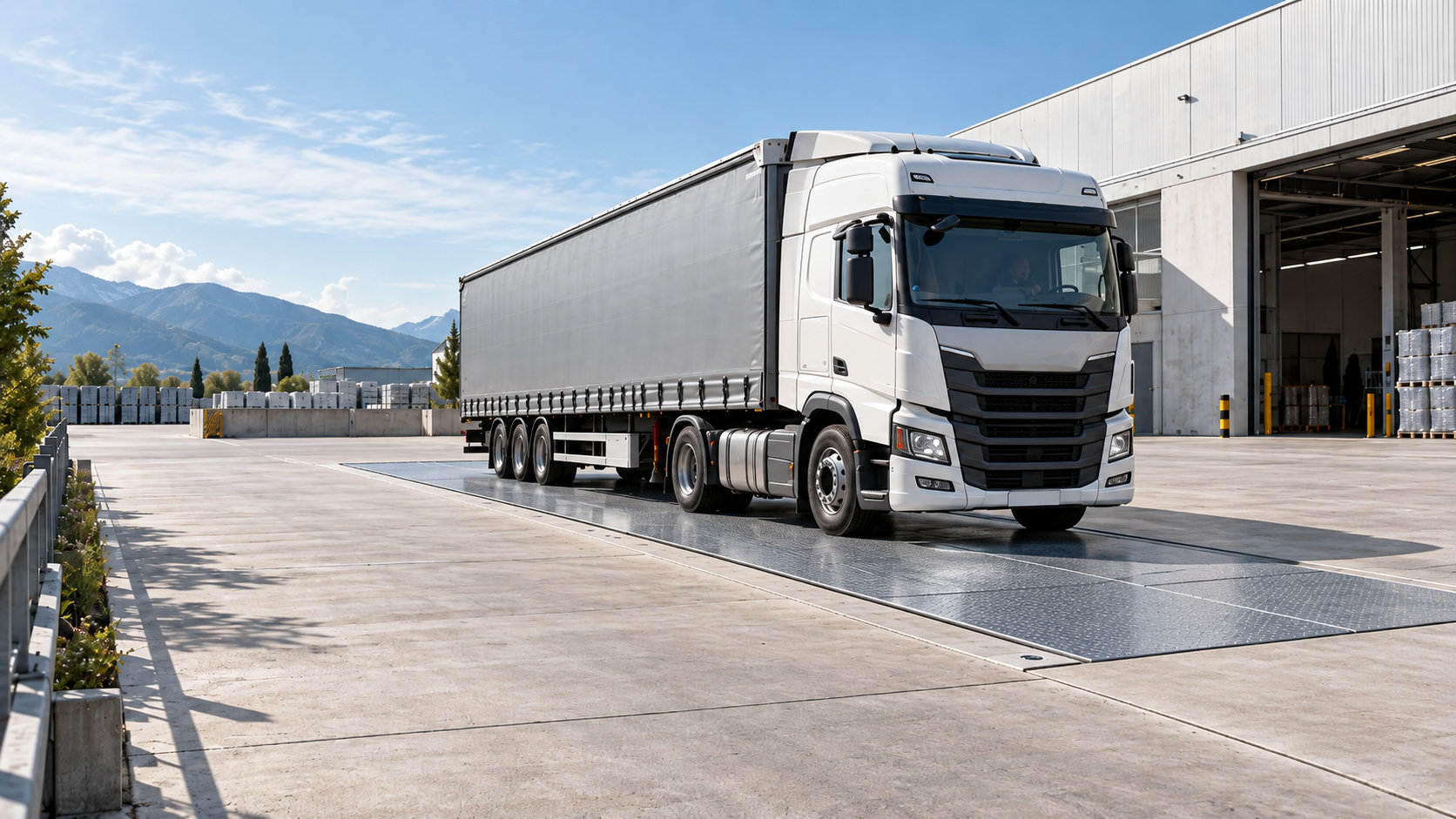
On electronic weighbridges, the vehicle drives onto the weighing platform and the load is detected by the load cells installed beneath the structure. The weighing system then provides the weight value, which can be displayed on the weight indicator and managed through the software included in the system configuration.
I Bilanciai weighbridges are modular electronic structures made to measure for weighing heavy vehicles and can be designed, according to the selected configuration, either flush-mounted or above-ground. I Bilanciai produces varnished, hot-dip galvanised and double-lane versions; the weighbridges use IP68 load cells and can be paired with the weight indicators specified for the project.
From the operator’s point of view, however, the principle is even simpler: the truck must be correctly positioned on the platform, the reading is acquired and the data is associated with the operation being carried out.
What happens next is what distinguishes a simple weight reading from a complete weighing-management system.
Single or double weighing: they are not the same operation
A single weighing records the vehicle’s weight at a specific moment. It may be sufficient when the process simply requires that reading to be known and stored.
A double weighing, by contrast, links two weight readings for the same vehicle. A typical example is a truck that enters in one condition and is weighed again after loading or unloading material.
This is where the weighbridge becomes particularly important in receiving, delivery, dispatch and material-handling flows.
I Bilanciai’s Weighbridge software specifically supports both single weighings and double entry/exit weighings.
The double-weighing workflow
In an organised process, a double weighing is not simply two values recorded separately. The two readings must belong to the same operation.
1. The vehicle and the data required for the record are identified. 2. The truck is positioned entirely on the weighbridge and the first weighing is acquired. 3. The vehicle continues through its operating cycle, for example to the loading or unloading point. 4. At the end of the operation, it returns to the weighbridge and the second weighing is acquired. 5. The two readings are associated to determine the quantity resulting from the weight difference. 6. The data can be stored and, depending on the configuration used, printed on tickets or included in reports.
This method links the quantity handled to a specific operation without requiring the actual load weight to be known in advance.
This is precisely why double weighing is so widely used when material enters or leaves a facility by road vehicle.
Gross, tare and net: what they really mean in truck weighing
These three terms are used constantly in truck weighing, but they only make sense when read in the context of the process.
Gross weight is the total weight of the vehicle in its loaded condition. Tare is the weight of the vehicle or container that must be deducted. Net weight is the quantity that is actually relevant to the material movement and is obtained from the difference between gross and tare.
The relationship is:
net weight = gross weight − tare
In practice, however, these concepts should not be confused with the chronological order of the two weighings. A truck may arrive loaded and leave empty, or enter empty and leave loaded. It is therefore more accurate to think in terms of first and second weighing, with gross, tare and net assigned according to the operation actually carried out.
It is a small difference in terminology that avoids considerable confusion in company procedures.
Example: a truck enters loaded and leaves empty
Imagine a lorry delivering material to a facility.
On arrival it is weighed while loaded. After unloading, it returns to the weighbridge under the conditions defined by the process. The difference between the two readings determines the weight of the material actually delivered.
If the flow is reversed—for example, a vehicle arrives empty to collect goods—the logic remains the same, but the sequence of conditions is reversed.
The weighbridge records the two values, while the operating process links them correctly to the material movement and turns them into useful data.
This distinction matters because it makes it possible to design clear procedures even when receiving, dispatch, deliveries and other types of material movement coexist within the same facility.

Weighbridge or axle weighing platform: which data do we need?
A weighbridge and an axle weighing platform can both be used to weigh heavy vehicles, but they do not answer the same question.
A weighbridge is the natural choice when the total vehicle weight is required. The truck is positioned entirely on the platform and the measurement relates to the vehicle as a whole.
The I Bilanciai axle weighing platform, by contrast, is designed to dynamically measure individual axles as the vehicle passes over the system; the vehicle weight is then obtained by adding together the axle readings.
Before asking which “truck weighing system” to buy, it is therefore better to define the requirement correctly.
If you need to know the truck’s total weight, the relevant system is a weighbridge.
If you need to know how the weight is distributed across the individual axles, the relevant system is an axle weighing platform.
They provide different information, so it makes no sense to choose one technology expecting it automatically to replace the other.
Where software fits into truck weighing
The platform measures weight. In many companies, however, the real operational value comes from linking that weight to the information that describes the material movement.
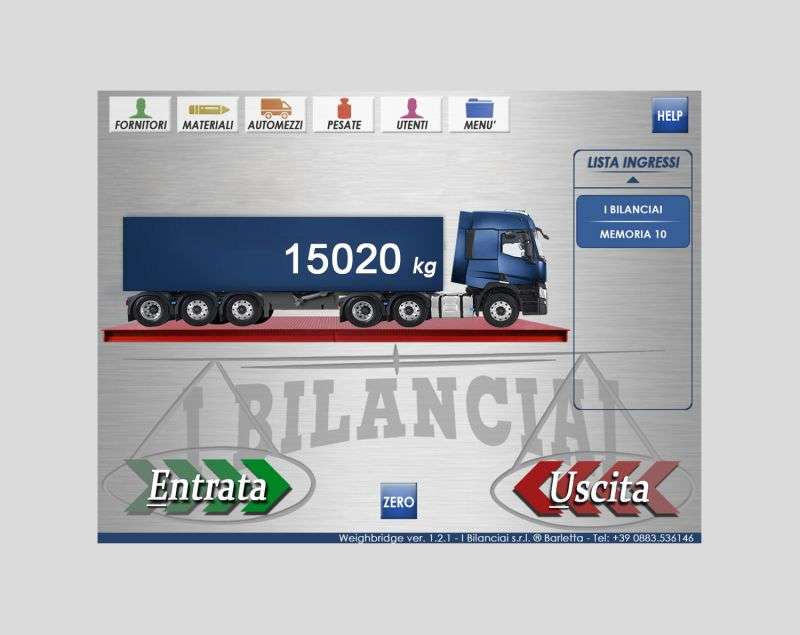
I Bilanciai’s Weighbridge software manages single and double weighings, stores weighing-operation data and uses dedicated customer, material and vehicle records. The system also displays weighbridge status and stored weighings. POS and TMU printers can be used for tickets and reports, and data can also be exported.
This makes it possible to move from:
“the truck weighs X”
to something far more useful:
“this weighing belongs to this vehicle, concerns this material and is linked to this operation”.
This is the step that makes weight data usable in day-to-day operations.
Correctly associating the weighing with the vehicle, material and party involved already reduces the amount of information that later has to be reconstructed and makes the data immediately usable within the company process.
Why recording the first weighing correctly matters
In a double weighing, the second value on its own tells you very little.
The data becomes useful when it can be linked unambiguously to the first reading. The vehicle must therefore be recognised within the process and the required information must be recorded consistently.
This is one of the less visible aspects of a weighing system, but also one of the most important: a good weighbridge produces data; a good process makes it possible to know what that data belongs to.
For companies with many daily movements, this difference matters more than it may appear. Weighing speed is important, but so is avoiding the need to reconstruct later which truck, material or operation a reading belonged to.
The weighing process depends on the company’s operations
The measurement principle remains the same, but what happens around the weighbridge can vary considerably from one business to another.
In logistics, it may be essential to control incoming and outgoing vehicles and keep an orderly record of movements. In waste management, weight forms part of the acceptance process. In agriculture, it can be used to record material received or dispatched. On construction sites, weighing can accompany the movement of materials and vehicles into and out of the site.
These are some of the application areas that I Bilanciai identifies for the Weighbridge software.
The records change, the information associated with each weighing changes and the number of vehicles changes. The initial question, however, remains the same: what data must the system produce, and how will it be used?
Good weighing also means designing the truck flow
A weighbridge does not operate in isolation from the yard.
Perché il sistema sia utilizzabile, il veicolo deve poter raggiungere la piattaforma, posizionarsi interamente per la rilevazione e proseguire senza trasformare ogni pesata in un rallentamento dell’attività. Per questo dimensioni della pesa, configurazione dell’installazione e caratteristiche dei mezzi devono essere considerate insieme.
I Bilanciai produces modular weighbridges for heavy vehicles, all made to measure according to the vehicles, capacity, yard and operating process. Varnished, hot-dip galvanised and double-lane versions are available, together with the axle weighing platform.
The choice should therefore not begin with the question “which is the largest weighbridge?”, but with more practical questions: which vehicles must be weighed, which data is required, how many operations must be managed and how will the result enter the company process?
This is the information that turns a simple truck scale into a weighing system designed for the work it has to perform.
From weighing to process management
A truck weighing system is useful when the data it produces actually becomes part of the company’s work.
First and second weighing, gross, tare and net, vehicle identification, material recording, tickets and archiving are not separate elements: they are parts of the same process. The platform provides the measurement; system design and data management determine how easy that measurement is to obtain and how useful it is afterwards.
For this reason, the right question is not simply “how do you weigh a truck?”.
It is:
“what information do I need to obtain from that truck, and what do I need to do with it afterwards?”
Everything else follows from that answer.
WANT TO KNOW HOW MUCH YOUR WEIGHBRIDGE WILL COST?
Describe the vehicles, yard and intended use: the I Bilanciai team can identify the configuration that should be assessed in more detail.
QUICK ANSWERS
Frequently asked questions about truck weighing
How do you weigh a truck correctly on a weighbridge?
The vehicle is positioned entirely on the weighing platform according to the procedure defined for the installation. The load cells detect the applied load and the system returns the total weight measurement. The data can then be recorded and associated with the information required by the process.
What is the weighing system used for trucks and articulated lorries called?
The most common term is weighbridge. Searches also use expressions such as truck weighing, weighbridge for trucks, truck scale or lorry scale. When the aim is to measure the axles separately, the correct term is axle weighing platform.
What is the difference between a single weighing and a double weighing?
A single weighing records one measurement of the vehicle. A double weighing links two measurements of the same vehicle in different conditions, normally before and after loading or unloading, in order to determine the quantity moved.
What is the difference between gross, tare and net weight?
Gross is the total weight of the vehicle in the loaded condition. Tare is the weight of the vehicle or container to be deducted. Net is the difference between the two and represents the quantity resulting from the material movement.
Does a truck have to be weighed twice?
Not always. It depends on the data required. If the process only needs to record the vehicle’s weight, a single weighing may be sufficient. If the quantity loaded or unloaded has to be determined by comparing two conditions of the same vehicle, double weighing is used.
Are a weighbridge and an axle weighing platform the same thing?
No. A weighbridge measures the total weight of the vehicle while it is on the platform. The I Bilanciai axle weighing platform dynamically measures the individual axles as the vehicle passes over it and calculates the vehicle weight by adding the readings together.
Is software required to weigh a truck?
Weight measurement is performed by the weighing system. Software becomes particularly useful when the weighing must be stored, associated with customers, materials and vehicles, linked to a first or second weighing, or used to produce tickets, reports and data exports. These are the functions through which Weighbridge organises weighing operations and their data.
What information should be defined before choosing a truck weighbridge?
Start at least with the type of vehicles to be weighed, the data required—total vehicle weight or axle weight—the way loading and unloading take place, and how the information must be managed after weighing. Dimensions, installation, software and automation level come afterwards: they must support the process rather than complicate it.
Can a weighbridge be used for articulated lorries and articulated vehicles?
Yes. I Bilanciai weighbridges are designed for weighing heavy road vehicles, articulated lorries and articulated vehicles and are made to measure: dimensions, capacity and configuration are defined according to the vehicles and the project.
Can the weight be printed or stored?
Weighbridge supports the storage of weighings, the production of tickets and reports through compatible peripherals, and data export.
Technical sources
- The I Bilanciai system characteristics cited in this guide are based on the official pages dedicated to weighbridges, Weighbridge – Weighbridge Management software and the Axle Weighing Platform.
Last technical review: 1 September 2026. Published by I BILANCIAI S.r.l.
TELL US ABOUT YOUR WEIGHING REQUIREMENTS
Provide the essential information. You do not need to know the model or configuration in advance.
I BILANCIAI S.r.l.
Via dell’Industria, 35
76121 Barletta (BT)
+39 0883 536146 / 334465
REQUEST A QUOTATION
Describe the operating context: your request will be handled by the I Bilanciai team.